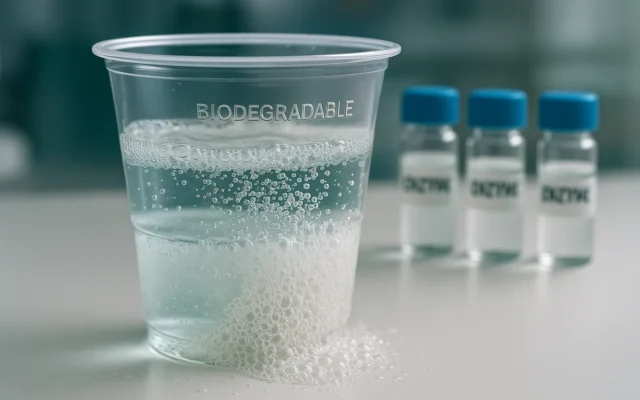
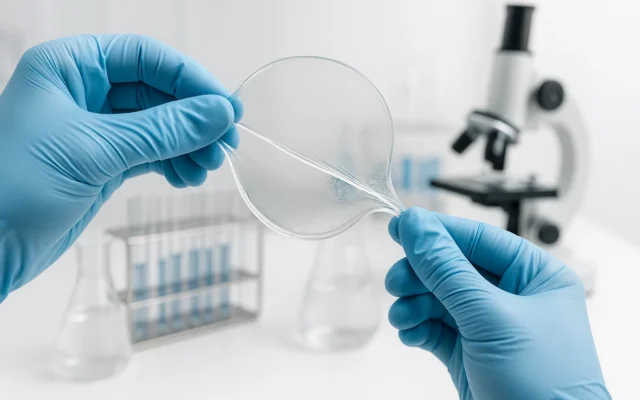
A milk-based biodegradable plastic made from casein, the main protein in cow’s milk, breaks down completely in soil within 13 weeks. It meets EN 13432 for compostability and performs mechanically like conventional polystyrene, which puts it in range as a drop-in replacement for food packaging and single-use products.
Casein plastic is over a century old
Milk protein has been made into material before. Casein plastics were used for buttons and decorative objects as early as the 1900s, and they were brittle and fell apart in water. What is new here is cross-linking chemistry and plasticizer blends that fix both faults.
The feedstock choice matters as much as the chemistry. The casein comes from waste milk, the surplus and off-spec product that dairy processors discard by the million tonnes each year. That places it alongside other bio-based polymers built on food-industry byproducts rather than crops.

Performance and certification
Tensile strength and elastic modulus fall within the range of general-purpose polystyrene. In standardized biodegradation testing at 58°C the material passed 90% disintegration inside 13 weeks, which is the threshold EN 13432 sets for industrial compostability.
Production is straightforward: acid precipitation extracts the casein from waste milk, it is blended with natural plasticizers such as glycerol and citric acid, and the mixture runs through ordinary extruders and injection molding machines. No specialised equipment is needed.
A protein base is inherently food-safe, which points the first applications at food packaging. Single-use cutlery, coffee pods and agricultural mulch film are also under investigation.
Why polystyrene is the target
Polystyrene is among the hardest conventional plastics to recycle, at rates below 5% in most countries. A biodegradable material with comparable performance has an obvious opening, particularly where expanded polystyrene is already banned.
It also fits the end-of-life options framework that regulators and brands now ask about by default. Home composting trials look promising, though that certification is still outstanding.
Scaling up
The team is working with European dairy cooperatives to secure consistent feedstock for pilot production, with a 500 tonnes per year demonstration facility planned for late 2027.
Approval for direct food contact is being sought from EFSA and the FDA. Casein already holds GRAS status in the United States, which should shorten the process there.
More on this class of materials in our Knowledge Zone on Bio-based Polymers.