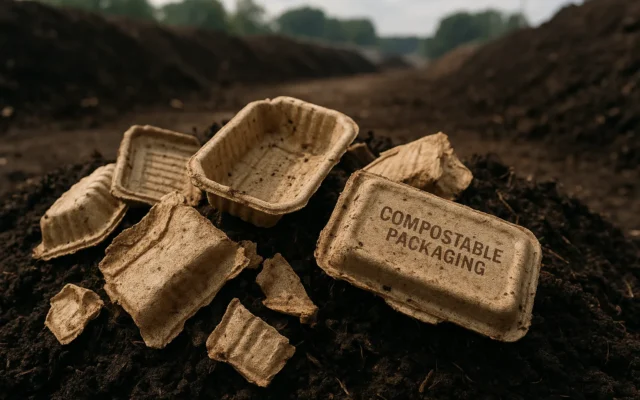
India’s Ministry of Chemicals and Fertilizers has announced a $238 million bioplastics plant in Maharashtra that will turn sugar industry waste into 100,000 tonnes a year of PLA and PBS. The India bioplastics plant, a joint venture between Indian Oil Corporation and a European technology provider, is the largest single bioplastics investment in South Asia.
The problem it addresses
India consumes 22 million tonnes of plastic a year, growing 8-10% annually. The 2022 national ban on identified single-use plastics created demand for alternatives that domestic industry could not supply at price. The National Bioplastics Mission aims to replace 20% of conventional plastics with bio-based material by 2030.
Maharashtra is India’s largest sugarcane-producing state, which puts millions of tonnes of bagasse and molasses within reach of the plant gate.

The plant
Sited in Marathwada with Indian Oil Corporation holding 51%, output splits into 70,000 t/yr of PLA and 30,000 t/yr of PBS. PLA goes to packaging, containers and foodservice; PBS to agricultural mulch film and flexible packaging. The mix is aimed at the Indian market rather than at export.
Bagasse is enzymatically hydrolyzed to lactic acid for the PLA line, molasses fermented to succinic acid for PBS. Excess bagasse runs a combined heat and power unit intended to make the site energy self-sufficient. Construction starts in Q4 2026 and commissioning is due late 2028, with projected savings of 250,000 tonnes of CO2 a year, 2,500 direct jobs and 8,000 to 10,000 indirect.
What it changes regionally
At 100,000 t/yr the plant ranks among the five largest bioplastics facilities in the world. More importantly for India, domestic bio-based polymers at competitive prices make industrial composting worth building, and several states are already looking at those investments.
What follows
Further plants are planned in Uttar Pradesh using rice straw and in Karnataka using coconut husk. Policy support includes reduced GST on certified compostable products and EPR credits, and the Bureau of Indian Standards is finalising national bioplastics certification protocols. More in our Knowledge Zone on Market and Trends.