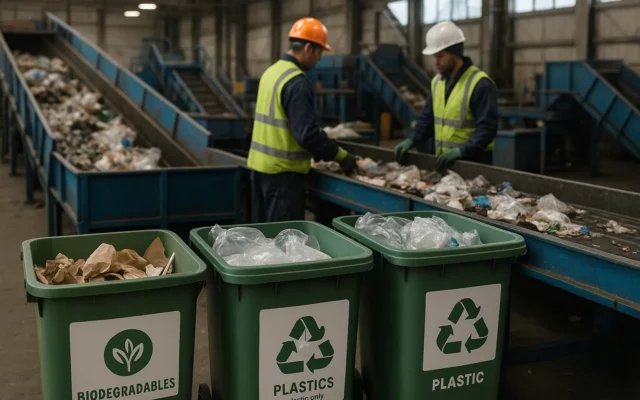
Compostable packaging promises to reduce plastic waste by breaking down alongside organic matter. But does it actually work at scale? A comprehensive study published in Bioresource Technology provides real-world evidence from full-scale industrial composting conditions, and the results are encouraging for the compostable packaging composting pathway.
Study Design: Real-World Industrial Composting
Led by Gastaldi E, Buendia F, Greuet P, and colleagues, this research examined compostable packaging mixed with household biowaste under full-scale windrow composting conditions — not controlled laboratory settings. This distinction matters because laboratory compostability testing has long been criticized for not reflecting actual processing environments.
The study tracked the degradation of certified compostable packaging materials through the entire composting process, analyzing both the breakdown of materials and the quality of the resulting compost.
Key Findings
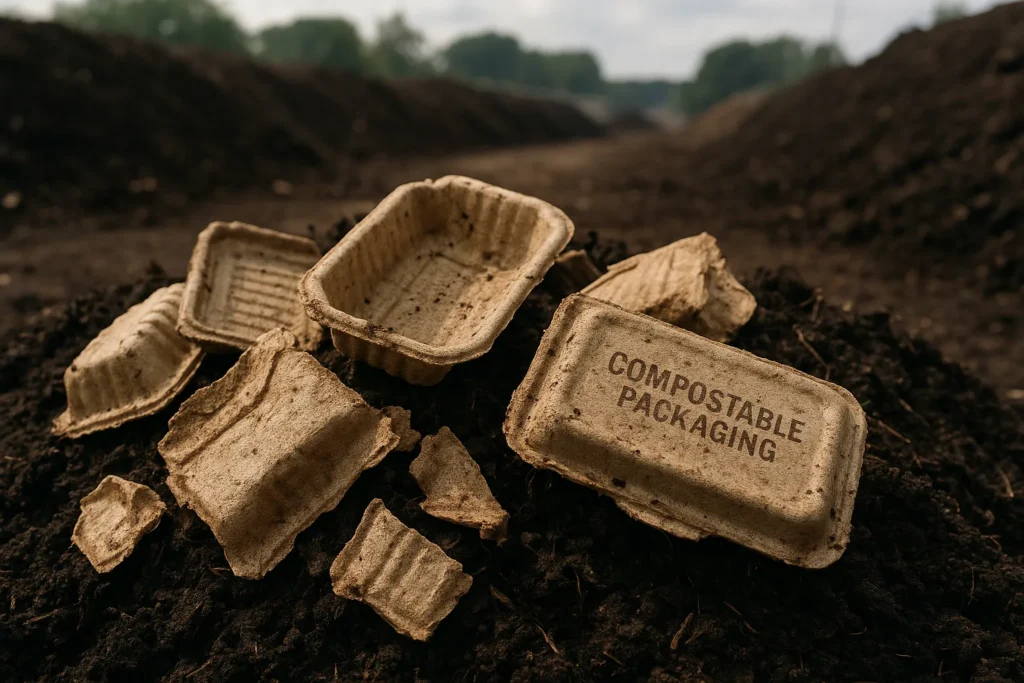
- 98% mass loss after 4 months — compostable packaging nearly completely degraded during the standard composting cycle
- No ecotoxicity detected — the resulting compost showed no harmful effects on plant growth or soil organisms
- Superior compost quality compared to compost from biowaste sent to incineration
- Agronomic benefits confirmed — compost with degraded packaging performed well in agricultural applications
Why These Results Matter for Compostable Packaging Composting
One of the most persistent criticisms of compostable packaging is that it does not actually break down in practice. Skeptics point to cases where packaging remains intact in finished compost or contaminates the final product. This study directly addresses those concerns with robust, full-scale data.
The 98% mass loss figure is particularly significant. It demonstrates that when compostable packaging enters a properly managed industrial composting facility, it degrades almost entirely within the standard processing window. This is critical for waste management operators who need assurance that accepting compostable packaging will not compromise their compost quality.
Implications for Waste Management Infrastructure
- Industrial composting facilities can confidently accept certified compostable packaging
- Co-processing with household biowaste does not impair compost quality
- The composting pathway offers environmental advantages over incineration
- Data supports policy decisions to expand organic waste collection to include compostable packaging
The Bigger Picture
This research provides a critical piece of evidence in the ongoing debate about compostable packaging. While challenges remain — including consumer sorting accuracy, collection infrastructure gaps, and the need for clear labeling — the data shows that the materials themselves perform as intended under real industrial conditions.
For municipalities and waste processors considering whether to accept compostable packaging in organic waste streams, this study offers concrete, data-backed justification. The environmental and agronomic benefits of composting over incineration further strengthen the case for investing in this waste management pathway.
Source: Gastaldi E, Buendia F, Greuet P et al. “Degradation and environmental assessment of compostable packaging mixed with biowaste in full-scale industrial composting conditions.” Bioresource Technology, 2024. Read the full study.
FAQ
Does compostable packaging actually break down in industrial composting?
Yes. This study found 98% mass loss after 4 months in full-scale industrial windrow composting, demonstrating near-complete degradation under real operating conditions.
Is the resulting compost safe to use?
The study confirmed no ecotoxicity in the finished compost and validated agronomic benefits, meaning the compost is safe and effective for agricultural use.
Can compostable packaging be composted at home?
This study examined industrial composting conditions with higher temperatures and controlled processes. Most certified compostable packaging is designed for industrial facilities, not home composting bins.
How does composting compostable packaging compare to incineration?
The study found that compost from biowaste with compostable packaging showed superior quality compared to outcomes from incineration, supporting composting as the preferred end-of-life pathway.