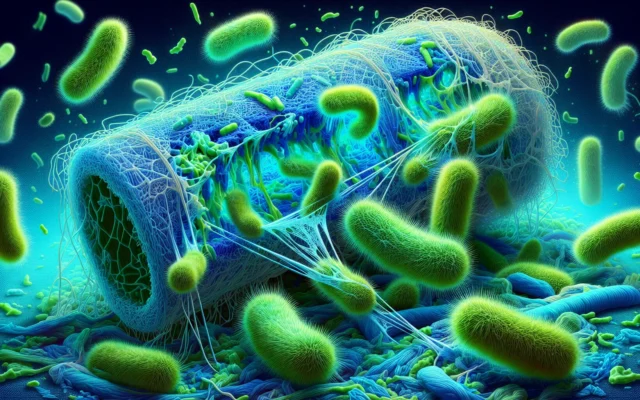
A groundbreaking pilot system has achieved what many considered impossible: converting dissolved CO2 from ocean water directly into PHA bioplastic using engineered marine bacteria. This ocean CO2 bioplastic technology, funded by ARPA-E, exploits a key fact — seawater contains roughly 150 times more CO2 than the atmosphere — to produce biodegradable plastic while mitigating ocean acidification.
Background: The Ocean as Carbon Source
The world’s oceans absorb approximately 30% of anthropogenic CO2 emissions, causing ocean acidification. Ocean water holds dissolved CO2 at concentrations equivalent to roughly 63,000 ppm — far more than atmospheric 420 ppm. The university consortium recognized this extracted CO2 could serve as feedstock for bio-based polymers rather than just being sequestered.

Key Details: Three-Stage Process
Stage one: an electrochemical module extracts dissolved CO2 from seawater, returning de-acidified water to the ocean. Stage two: captured CO2 is fed to engineered methanotrophic bacteria in bioreactors, which accumulate PHA at up to 80% of dry cell weight. Stage three: cells are harvested, PHA extracted and pelletized. The resulting bioplastic is fully biodegradable in marine, soil, and composting environments, suitable for packaging applications.
Industry Impact: New Feedstock Paradigm
Ocean-derived CO2 could reduce PHA raw material costs by up to 60%. Companies adopting this material could claim carbon-negative production and ocean restoration benefits under emerging standards frameworks.
What’s Next
A larger demonstration unit is planned for a coastal site in 2027, with partnerships targeting competitive PHA pricing by 2029. Explore how PHA compares to other materials in our Knowledge Zone.