Engineered Pseudomonas bacteria have broken nylon-6 back down into caprolactam monomers at room temperature. The bacteria nylon recycling process uses roughly 90% less energy than conventional chemical recycling, and it returns a monomer good enough to make new nylon from.
The nylon waste problem
Nylon production exceeds 8 million tonnes a year and under 10% of it is recycled anywhere in the world. Mechanical recycling shortens the polymer chains a little more with every pass. Chemical recycling works but needs temperatures above 300°C.
The biological route has a long history. In 1975 Japanese researchers found a bacterium living near a nylon factory that had evolved enzymes to digest the stuff. Fifty years of work later, synthetic biology tools have made that discovery usable.

How the engineered bacteria work
The team improved nylonase enzymes by directed evolution and expressed them in engineered Pseudomonas putida. The process runs at ambient temperature, 20-30°C, and neutral pH.
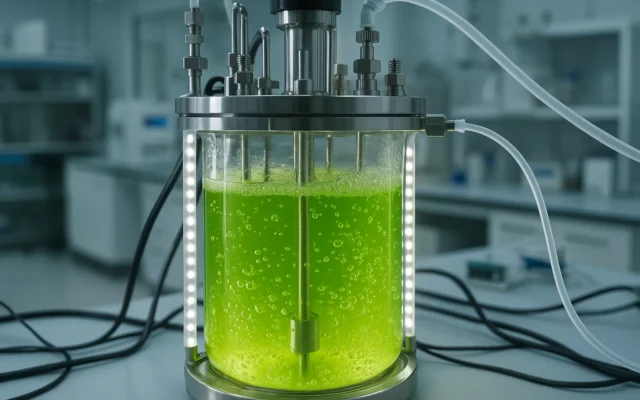
Shredded nylon waste goes into bioreactors where the bacteria secrete nylonase, which depolymerizes it into caprolactam. Laboratory trials passed 95% depolymerization within 72 hours, and the recovered caprolactam was analytically indistinguishable from the petroleum-derived monomer. DARPA and the EPA funded the work.
What it would change
The nylon value chain is worth over $30 billion, and this end-of-life technology targets its hardest waste streams: fishing nets and carpets, both of which defeat mechanical recycling. Nylon that can be recycled indefinitely also weakens demand for the petroleum feedstock behind fossil-based polymers.
Timeline
A pilot demonstration plant is targeted for 2028 and commercial operation for 2031. The same enzymatic approach is being tested on nylon-6,6. More in our Market and Trends Knowledge Zone.