Certain insect larvae eat plastic and digest part of it. A 2024 review in the Journal of Environmental Management covers what is known about insect plastic biodegradation: which species do it, how, and whether any of it could work at scale.
Which insects eat plastic
Three species account for most of the research:
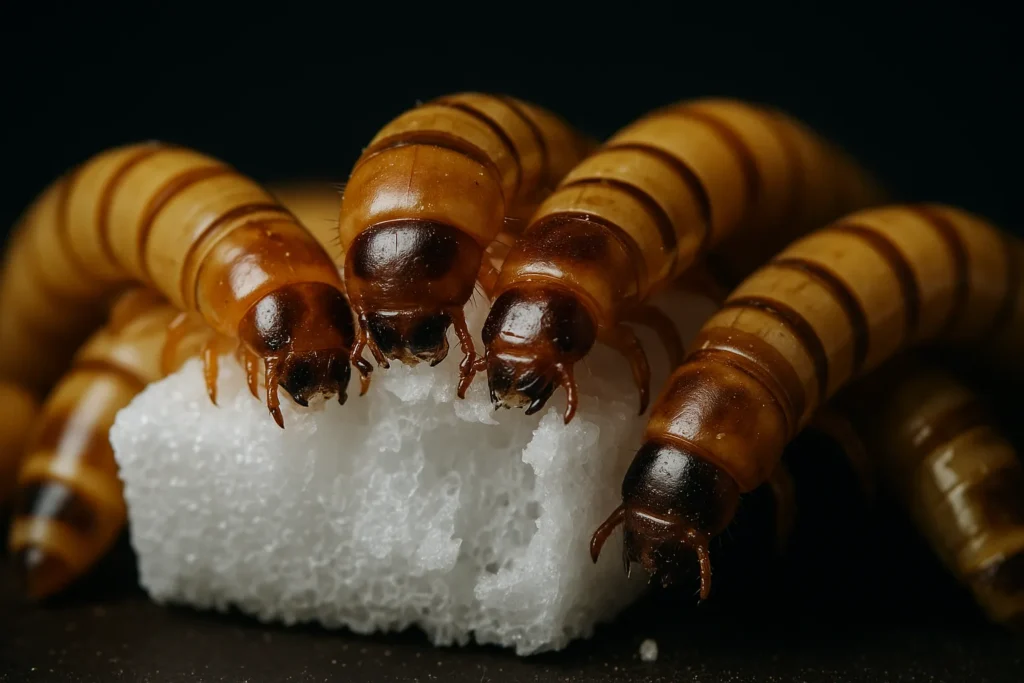
- Mealworms (Tenebrio molitor): The larvae of darkling beetles, mealworms can ingest and partially degrade polystyrene (PS) and polyethylene (PE). They have been the most extensively studied insect in plastic biodegradation research.
- Superworms (Zophobas morio): Larger relatives of mealworms, superworms show even higher plastic consumption rates due to their greater body mass and more active gut microbial communities.
- Greater wax moths (Galleria mellonella): Originally known as beekeeping pests that eat beeswax, wax moth larvae have been found to break down polyethylene, likely because the chemical bonds in PE resemble those in natural waxes.
The gut microbiome does the chemistry
The insects are not working alone. The bacterial communities in their digestive tracts do the part that matters, and the review sets out how that was established.
Wipe out the gut bacteria with antibiotics and the larvae lose most of their ability to degrade plastic. Grinding the material up is not enough; microbial enzymes are doing the actual depolymerization.
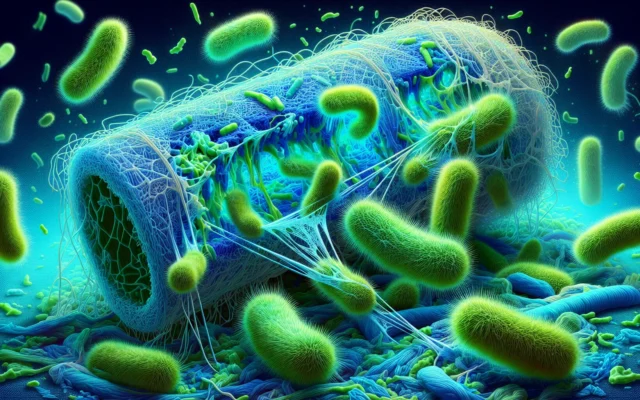
Specific genera, including Enterobacter, Bacillus and Pseudomonas, have been isolated from insect guts and shown to degrade plastic on their own in the laboratory. They produce esterases, laccases and oxidases that cut polymer chains into smaller fragments.
What happens to the plastic
Two steps, physical then biochemical. The insect shreds the plastic into microparticles, which multiplies the surface area available to enzymes. Gut microbes then break those fragments into oligomers and monomers, metabolizing some as carbon and energy. What comes out as frass still contains partially degraded polymer residue alongside metabolic byproducts.
Could this handle plastic waste?
Not at these rates. A single mealworm eats roughly 30 to 40 milligrams of polystyrene a day, against global plastic production measured in hundreds of millions of tonnes. Closing that gap would mean insect farms at an implausible scale, plus somewhere to put the partially degraded output.
The value is more likely to be in the enzymes themselves. Isolating what those gut microbes produce and engineering it for industrial use could give recycling processes that work far faster than any larva.
Source: Vishnu Murthy JS, Keerthana A, Logeswaran K et al. “Harnessing insects mediated plastic biodegradation: Current insight and future directions.” Journal of Environmental Management, 2024. Read the full study.
FAQ
Can mealworms really eat plastic?
Yes. Mealworms (Tenebrio molitor) can ingest polystyrene and polyethylene. Their gut bacteria produce enzymes that partially break down the polymer chains, though complete mineralization is not always achieved.
What role do gut bacteria play in insect plastic biodegradation?
Gut bacteria are essential to the process. When antibiotics eliminate these microbes, the insects’ ability to degrade plastic decreases dramatically. Bacterial enzymes like esterases and laccases are responsible for the chemical breakdown of polymer chains.
Could insects be used to manage plastic waste at scale?
Currently, no. Individual insects consume very small amounts of plastic, and scaling insect farms for waste management faces significant logistical and economic challenges. However, enzymes derived from insect gut microbes could be used in industrial bioremediation processes.
Is insect-degraded plastic safe for the environment?
The byproducts of insect-mediated plastic degradation are still being studied. While some polymer fragments are fully metabolized, others may persist as microplastics in the frass, requiring further evaluation of environmental safety.