A bioplastic cooling film made from cellulose and polylactic acid (PLA) has cut surface temperatures by up to 9.2°C using no electricity at all. The transparent film reflects incoming sunlight while emitting thermal infrared energy straight out to space, a mechanism called radiative cooling. In hot climates the implication is less air conditioning.
How radiative cooling works
Radiative cooling happens whenever a surface emits more thermal energy than it takes in. The hard part is doing it in daylight, which means rejecting enough solar energy while still emitting strongly in the atmospheric transparency window between roughly 8 and 13 micrometers.
Earlier materials managed it with synthetic polymers, metal oxide nanoparticles or multilayer thin films, all expensive and none of them sustainable. This bioplastic cooling film uses bio-based biodegradable materials instead. Our Bio-based Polymers guide covers PLA and cellulose as feedstocks.

How the film is built
The team dispersed cellulose nanocrystals through a PLA matrix. That produces a hierarchical microstructure which scatters visible and near-infrared sunlight efficiently.
The material choice does the rest. Cellulose and PLA both have strong molecular absorption bands in the thermal infrared that line up with the atmospheric window, so the film emits heat at exactly the wavelengths the atmosphere lets through.
Outdoor testing gave a sub-ambient temperature reduction of 9.2°C at peak daytime conditions, with solar reflectance above 95% and thermal infrared emissivity above 90% in the 8 to 13 micrometer window.
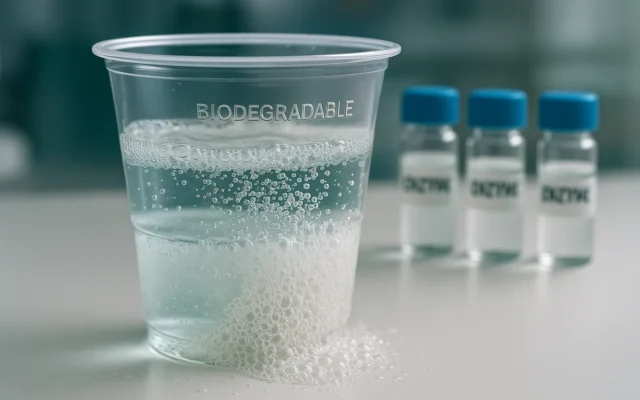
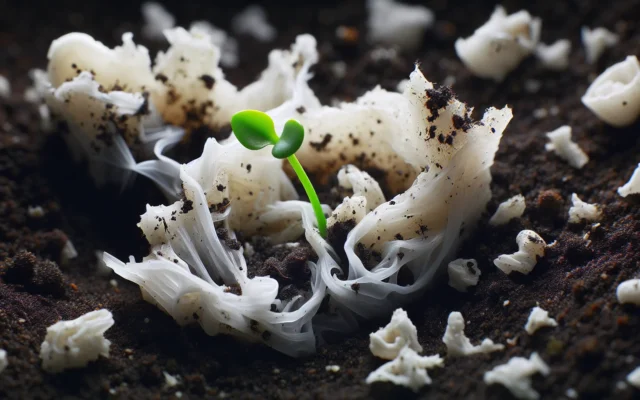
The film is also biodegradable, since both components break down under industrial composting. Our End-of-Life Options section covers how PLA-based products are processed.
Why the energy numbers matter
The International Energy Agency puts space cooling at roughly 16% of global electricity consumption in buildings. A film that cools passively takes a bite out of that without any grid connection.
The materials are already available at scale. PLA production exceeds 400,000 tonnes a year globally and cellulose is the most abundant biopolymer on Earth, which is a better starting position than most cooling technologies have. Beyond buildings, the applications extend to vehicles, cold-chain containers and textiles.
Getting it out of the laboratory
The team is working on roll-to-roll production. Holding the nanocrystal dispersion precise across a moving web is the main technical problem, followed by long-term durability under constant UV and then cost.
Building materials companies and green technology investors have approached about licensing, and pilot installations on commercial buildings are expected within 18 to 24 months.
For more on where bio-based materials are being used, see our Knowledge Zone.