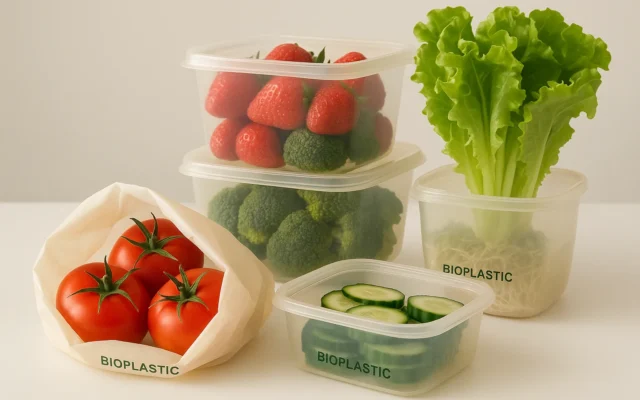
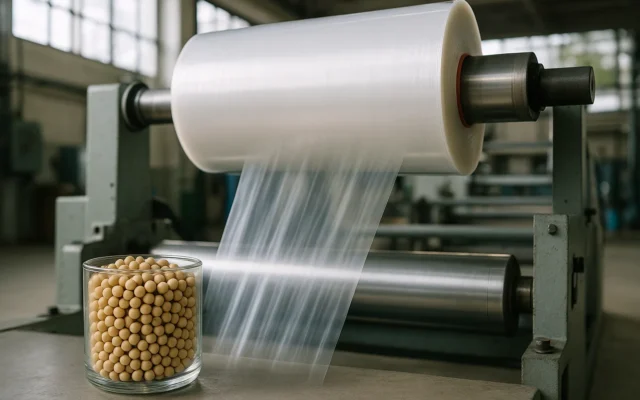
Two cheap, abundant materials, cellulose and glycerol, make a transparent flexible film that is cleared for direct food contact. A 2024 study in the International Journal of Biological Macromolecules sets out how, and the resulting cellulose bioplastic packaging clears several hurdles that have stopped other candidates.
What cellulose-glycerol films are
Cellulose is the most abundant organic polymer on Earth, the structural material in plant cell walls. Cellulose film on its own is brittle and awkward to process. Adding glycerol, a safe non-toxic plasticizer, at up to 50 wt% gives the film an amorphous molecular structure and a reinforced hydrogen-bond network, which is what makes it flexible without making it weak.
The films come out with four properties that matter commercially:
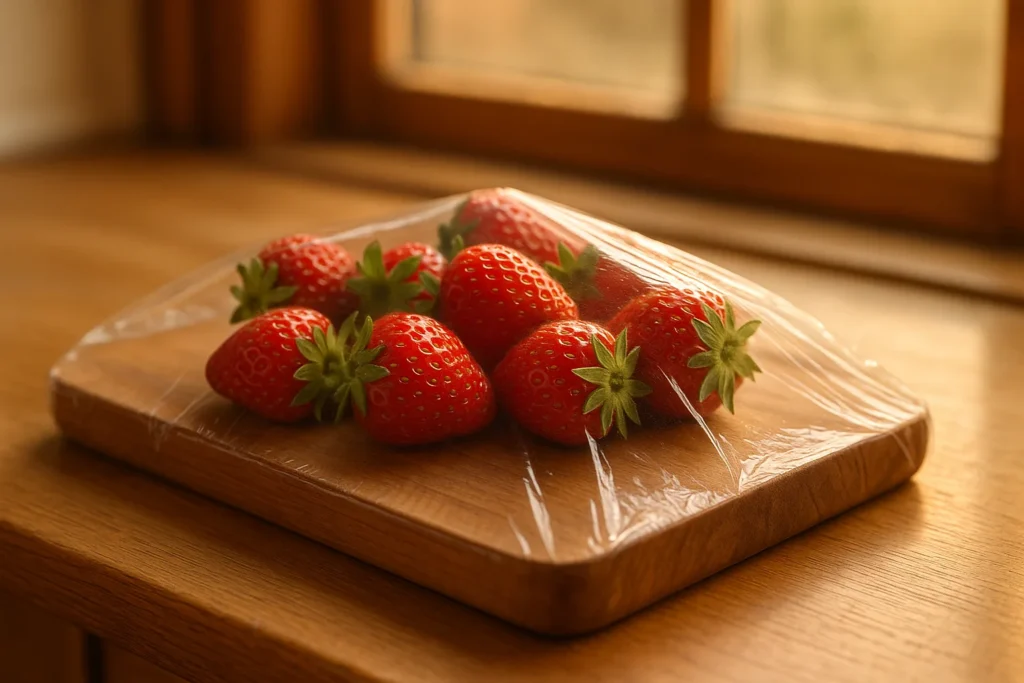
- High optical transparency, visually comparable to conventional plastic wrap
- Good greaseproof performance, which oily and fatty foods require
- Compliance with European food contact regulations, validated using the Tenax® food simulant
- Biodegradability in seawater, without industrial composting
Why the combination is unusual
Food packaging runs on polyethylene and polypropylene, which persist for centuries. Bioplastic alternatives such as PLA exist, and most of them fail on at least one of transparency, grease resistance or food contact approval. Cellulose-glycerol films clear all three at once.
Seawater biodegradation is the other distinguishing property. Marine plastic accumulation is among the hardest problems in the field precisely because ocean conditions are cold, dark and poor in the microbes that composting relies on. A film that breaks down there breaks down without any infrastructure at all.
Whether it scales
Both inputs are cheap and available everywhere. Glycerol is a biodiesel byproduct, so using it turns an existing waste stream into a product. A two-component formulation is also far easier to scale than the multi-step chemistries most bioplastics need.
Open questions remain. Long-term stability under real storage conditions is unproven, and the moisture barrier needs work for some food categories. The glycerol content also has to be tuned per application, since the same additive that gives flexibility costs mechanical strength.
What happens next
Cellulose-based materials keep proving they can hold their own against petroleum plastics in demanding applications, and food packaging is the most demanding of the commodity ones. With European regulation tightening on single-use plastics, transparent cellulose-glycerol film has a market waiting for it.
Source: Benitez JJ, Florido-Moreno P, Porras-Vázquez JM et al. “Transparent, plasticized cellulose-glycerol bioplastics for food packaging applications.” International Journal of Biological Macromolecules, 2024. Read the full study.
FAQ
What is cellulose bioplastic packaging?
Cellulose bioplastic packaging refers to films and wraps made from cellulose — a natural plant polymer — combined with plasticizers like glycerol to create flexible, transparent materials suitable for food contact applications.
Are cellulose-glycerol films safe for food?
Yes. According to the study, these films comply with European food contact regulations and have been tested using the Tenax® food simulant, which is the standard method for evaluating packaging safety.
Do cellulose-glycerol films biodegrade in the ocean?
The research confirms that these films biodegrade in seawater, making them a promising option for reducing marine plastic pollution compared to conventional petroleum-based packaging.
Can cellulose bioplastic replace regular plastic wrap?
These films show strong potential as a replacement due to their transparency, grease resistance, and regulatory compliance. However, further optimization of moisture barrier properties may be needed for certain food types.